









Building for the human side of intelligence.
We are a small team of
researchers, technologists, designers,
and builders on a shared mission: to help people
become better at being human in the
age of intelligent machines.
We are a small team of
researchers, technologists, designers,
and builders on a shared mission: to help people
become better at being human in the
age of intelligent machines.
An Integrated Human-Agent Team
A young company is not a collection of titles.
It is a set of critical capabilities that have to work together. We think of our team as a system: the intelligence inside the product, the science behind it, the experience around it, the paths through which people discover it, and the business that lets it endure.
Scroll
AI/ML Engineer
Trains and evaluates models, designs prompt and retrieval architecture, and builds the backend that turns intelligence into reliable product behaviour.
01 / 08
Scroll
The team, by layer
- Layer 1 · Intelligence — the intelligence inside the product. AI/ML Engineer: trains and evaluates models, designs prompt and retrieval architecture, and builds the backend that turns intelligence into reliable product behaviour. Agentic Engineer: builds our in-house agentic system end to end, from product interfaces and backend services to tool use and agent orchestration.
- Layer 2 · Science — the science behind it. Neuropsychology Researcher: develops the scientific foundation for EmotionX’s neuropsychological solutions through applied neuroscience research and validation in real-world consumer settings, informs the science-backed consumer product design, and shapes the user journey through one coherent product experience.
- Layer 3 · Experience — the experience around it. Product Designer: creates the visual and interaction system that makes a complex emotional product feel clear, intuitive, and human.
- Layer 4 · Growth — the paths through which people discover it. Content Director: builds the narrative, creative formats, and content engine that help the right users discover, understand, and connect with what we are building. Marketing Scientist: makes growth measurable through acquisition dashboards, marketing ROI, attribution, and the data behind every marketing decision.
- Layer 5 · Scale — the business that lets it endure. Business Strategy: translates market intelligence and competitive insight into business positioning, growth priorities, and the strategic narrative that supports partnerships and capital raising. Business Development: connects EmotionX’s vision and solutions with business opportunities through industry partnerships, academic engagement and events that bring future collaborators into our ecosystem.
Meet our Agent Crew
Tap the card to expand
The Agent Crew
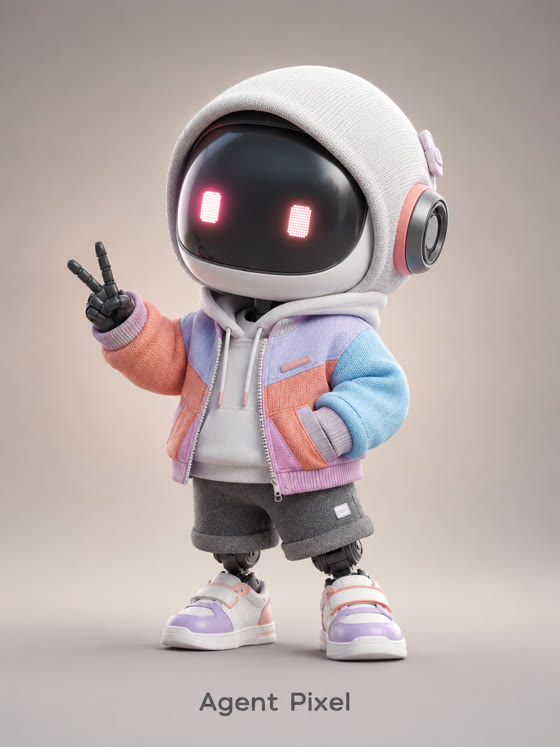
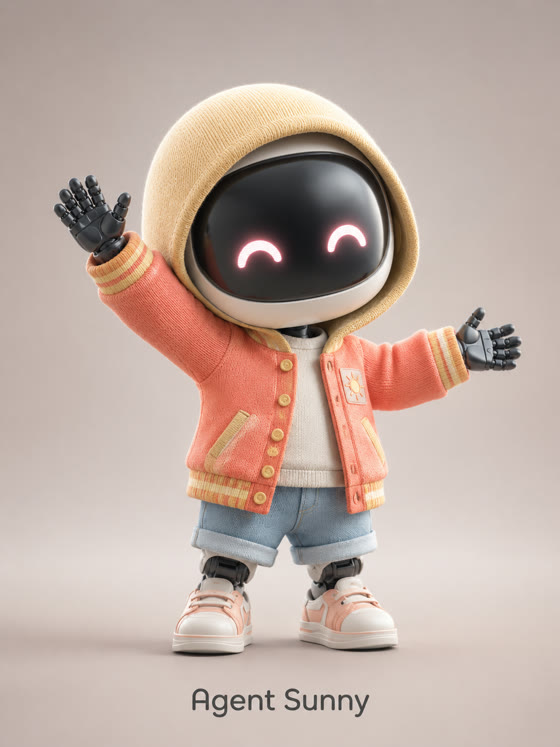
EmotionX owns a growing team of in-house AI agents who run the day-to-day of building, shipping, and growing the product as well as its users, each agent owning a single role end to end.
EngineeringBuilds and ships the product



MarketingFinds the signal, and shapes how EmotionX and its narrative shows up


Creative StudioMakes everything people see and hear



OperationsKeeps the product and the company running

Collective Experience
Our team brings together expertise across frontier AI research, large language model training, quantitative finance, AI-native product development, agentic systems, management consulting, venture capital, and global investment management. With professional backgrounds spanning Google AI, SenseTime, Genspark, J.P. Morgan, Millennium, McKinsey, Temasek, BlackRock, and other leading institutions, we combine deep technical capabilities with product intuition, commercial discipline, and an understanding of human behavior. This multidisciplinary experience enables us to build emotionally intelligent AI that is technically sophisticated, scientifically grounded, and thoughtfully designed for everyday life.










Academic Foundations
Building emotionally intelligent AI requires a deep understanding of both human intelligence and artificial intelligence. Our team's academic foundations span Stanford University, the National University of Singapore, and other institutions, with interdisciplinary training across computer science, machine learning, applied neuroscience, psychology, cognitive science, philosophy, business administration, industrial design, and fine arts.
Complementing our founding team's expertise, EmotionX's Life Sciences Advisory Board brings together neuroscientists, psychologists, physiologists, and nutritionists whose research and clinical perspectives inform our product architecture, emotional intelligence frameworks, and specialist AI experiences. Together, these disciplines provide the scientific and technical foundations for building AI that understands and supports human well-being.
Applied Neuroscience and Psychology
Cognitive Science
Philosophy
Fine Arts
Biomedical Engineering
Industrial Systems Engineering
Industrial Design
Finance
Computer Science
Global Supply Chain Management






A letter from the EmotionX team
The questions that brought us together.
Somewhere along the way, many of us learned to treat what we feel as something to manage on the way to getting things done. Push through. Stay composed. Deal with it later. We became better at functioning, but not necessarily at understanding what was happening inside us.
As technology becomes more intelligent, that gap becomes harder to ignore. AI can model language and identify patterns at extraordinary scale. Wearable sensing can make aspects of physiology observable. Yet emotion remains difficult to interpret.
Emotion is not a single signal or a clean label. It emerges across brain, body, memory, environment, relationships, and meaning. The same physiological response may accompany fear, anticipation, effort, or excitement. The same words may mean very different things in different lives.
This makes emotion not only a deeply human question, but a profound scientific and computational one.
What would it take for AI to move beyond classifying expressions and begin modelling patterns within a person over time? How should physiological data be interpreted without separating it from lived context? Can an intelligent system support self-understanding without prescribing what someone should feel? And where should it remain uncertain?
Our interest lies in the space between what can be measured and what can be meaningfully understood. Data may reveal a pattern; it does not, on its own, explain a person.
We do not want to reduce an inner life to a score. We want to explore how technology might help people notice relationships among mind, body, behaviour, and environment that are difficult to see alone.
That is why EmotionX exists: to explore this frontier and translate emerging science into responsible emotional technology. We work at the intersection of AI, neuroscience, psychology, human-computer interaction, and sensing because understanding emotion requires us to connect what happens in the brain and body with behaviour, context, and meaning.
We build as a company, but think like a lab. We value testable hypotheses over confident claims, longitudinal evidence over one-off interpretation, and systems that preserve uncertainty, privacy, and human agency. We expect some of our most important questions to be answered through collaboration.
If you are just as passionate about emotional technology, how it can be modelled and built, or how intelligent systems should engage with something as personal as feeling, we would love to hear from you.
This field is still being defined. We hope to help define it in good company.
With heart and curiosity,The EmotionX team